
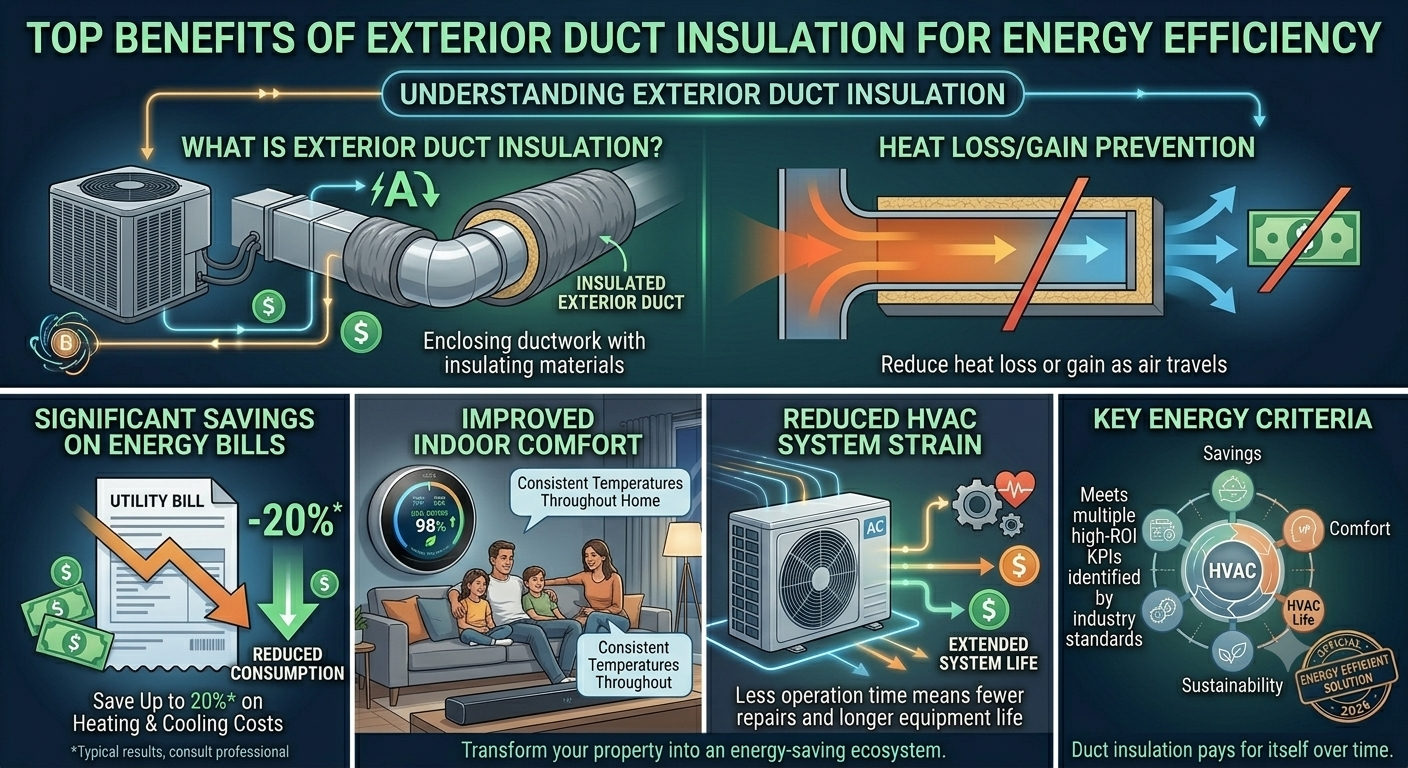
Top Benefits of Exterior Duct Insulation for Energy Efficiency
In today’s world, energy efficiency is a top priority for homeowners and businesses. As energy costs rise, effective solutions to reduce consumption become critical. One often-overlooked solution is exterior duct insulation.
Properly insulating ductwork can lead to significant savings on energy bills while improving indoor comfort. Here’s how exterior duct insulation transforms your energy usage and enhances your living or working environment.
Understanding Duct Insulation
What Is Duct Insulation?
Duct insulation is the process of enclosing ductwork with insulating materials to reduce heat loss or gain as air travels through the ducts. This applies to both residential and commercial settings.
Insulation materials include:
- Fiberglass
- Foam board
- Reflective insulation
These are applied to the exterior of the ducts. By insulating, you help maintain the desired air temperature throughout your home or office. Without insulation, heated or cooled air escapes easily, increasing energy consumption.
Types of Duct Insulation
| Type | Key Benefits | Best For |
|---|---|---|
| Fiberglass Insulation | Cost-effective, good thermal resistance | General use |
| Foam Board Insulation | High insulation value, space-efficient | Limited spaces |
| Reflective/Radiant Barrier | Reflects heat away | Hot climates |
Selecting the right type depends on climate, duct location, and budget. Each offers distinct advantages, so consider your specific needs.
When to Consider Duct Insulation
Insulate your ducts if you notice:
- High energy bills disproportionate to usage
- Temperature fluctuations between rooms (some consistently warmer/cooler)
- Visible wear or damage on existing ductwork
Addressing these issues through insulation enhances energy efficiency and improves overall comfort.
Energy Savings Through Exterior Duct Insulation
Reducing Energy Loss
One of the primary benefits is reducing energy loss. According to the U.S. Department of Energy, uninsulated ducts can lose 20% or more of the energy used to heat or cool your home.
Ducts in unconditioned spaces (attics, crawl spaces) are especially susceptible to temperature fluctuations. Insulating ensures air remains at the desired temperature, minimizing energy required to maintain comfort.
This efficiency translates to real savings. Homeowners often recover the cost of insulation within a few years through reduced monthly energy bills.
Improving HVAC System Efficiency
Well-insulated ducts mean your HVAC system doesn’t have to work as hard to maintain temperature. This reduced workload leads to:
- Less wear and tear on the system
- Fewer repair costs
- Extended HVAC lifespan
According to the American Society of Heating, Refrigerating and Air-Conditioning Engineers (ASHRAE), properly insulated ductwork can improve system efficiency by up to 20%.
Insulated ducts also maintain consistent airflow, ensuring every room receives adequate heating or cooling.
Lowering Carbon Footprint
Investing in exterior duct insulation saves money and supports environmental sustainability. Reduced energy consumption means lower carbon emissions.
According to the Environmental Protection Agency (EPA), energy efficiency improvements like duct insulation can significantly reduce greenhouse gas emissions. For environmentally conscious individuals and businesses, this is a compelling reason to insulate.
Many local governments also offer incentives or rebates for energy efficiency upgrades, further offsetting installation costs.
Enhancing Indoor Comfort
Maintaining Consistent Temperatures
Insulated ducts help maintain consistent temperatures throughout your space, reducing hot or cold spots. Poorly insulated ducts cause air temperature to fluctuate between rooms, leading to discomfort and frequent thermostat adjustments.
With proper insulation, air reaching your vents is at a more consistent temperature, creating a comfortable environment with less effort.
Improving Indoor Air Quality
Exterior duct insulation positively affects indoor air quality by minimizing condensation, which can lead to mold growth.
Mold spores circulating through air can exacerbate allergies and respiratory problems. By preventing condensation and maintaining stable duct temperatures, insulation keeps indoor air cleaner and healthier.
Insulated ducts are also less likely to attract pests, which can compromise air quality. You’re saving energy while promoting a healthier living environment.
Reducing Noise Pollution
Ducts can amplify sounds, especially when the HVAC system runs. Insulation acts as a sound barrier, softening noise traveling through ducts into your living space.
This is particularly beneficial in multi-story homes or offices where noise travels between floors. Insulating creates a quieter, more serene atmosphere for better focus, relaxation, or rest.
Installation Considerations and Best Practices
Choosing Professional Installation
While DIY duct insulation is possible, hiring a professional ensures the job is done correctly. Professionals have the expertise and tools to maximize efficiency and effectiveness.
When choosing a contractor, look for:
- Experience in duct insulation
- Positive customer reviews and testimonials
- Proper licensing and insurance
A qualified professional will inspect your existing ductwork and recommend the best insulation type and installation method for your needs.
Regular Maintenance and Inspections
To maintain insulation benefits, regular maintenance is essential. Over time, insulation can wear down or become damaged, reducing efficiency.
Schedule annual inspections with your HVAC technician to check insulation and overall ductwork condition. This proactive approach helps identify problems early and maintains system energy efficiency.
Regular duct cleaning also prevents dust and debris buildup, ensuring optimal airflow and indoor air quality.
Incorporating Smart Technology
Enhance energy efficiency by pairing duct insulation with smart technology. Smart thermostats optimize heating and cooling by learning preferences and adjusting accordingly.
When paired with insulated ducts, smart technology can significantly reduce energy consumption. Programmable settings allow different temperatures for different times of day, ensuring energy isn’t wasted when no one is home.
Some smart systems also monitor HVAC performance, alerting you to inefficiencies or needed repairs. This integration works hand-in-hand with duct insulation to maximize savings and comfort.
Conclusion
The benefits of exterior duct insulation for energy efficiency are substantial and multifaceted:
| Benefit | Impact |
|---|
| Benefit | Impact |
|---|---|
| Reduced Energy Loss | Up to 20% less energy wasted |
| Improved HVAC Efficiency | Up to 20% system efficiency gain |
| Lower Carbon Footprint | Reduced greenhouse gas emissions |
| Consistent Temperatures | Eliminated hot/cold spots |
| Better Air Quality | Less condensation, mold, and pests |
| Noise Reduction Quieter living/working environment |
Investing in duct insulation leads to significant cost savings on energy bills and contributes to a healthier, more comfortable environment. By choosing professional installation, maintaining ducts regularly, and incorporating smart technology, you maximize these benefits for years to come.
As demand for energy efficiency grows, exterior duct insulation stands out as a practical and impactful solution. Whether you’re a homeowner or business owner, insulating your ducts pays dividends in both comfort and savings.
One thought on “Top Benefits of Exterior Duct Insulation for Energy Efficiency”