
How Smart Home Technology Has Transformed Residential Design
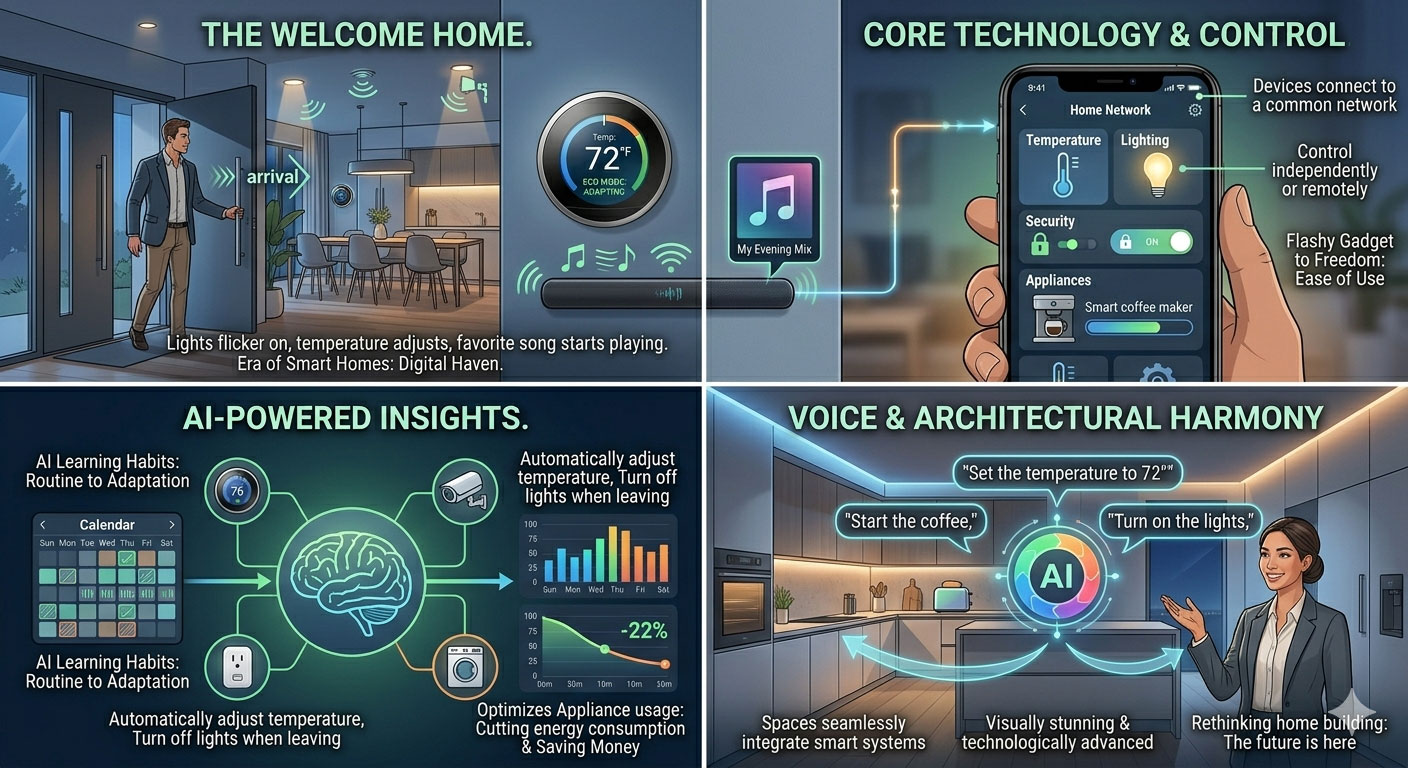
Imagine walking into your home after a long day. Lights flicker on, the temperature adjusts, and your favorite song starts playing.
Welcome to the era of smart homes, where your house isn’t just a dwelling—it’s a digital haven. It’s all about convenience, efficiency, and security.
As you read on, you’ll see how technology has woven itself into architecture, creating spaces that adapt to you. Let’s explore the future of living, where your home is as smart as you are.
What Is Smart Home Technology?
You’ve likely heard the term “smart home technology,” but what does it really mean?
In short, it refers to any suite of devices, appliances, or systems that connect to a common network and can be controlled independently or remotely.
In residential design, smart home tech is far more than a flashy gadget. It brings convenience and freedom. Imagine controlling your home’s temperature, dimming lights, locking doors, and managing security—all from your smartphone, whether you’re on the couch or miles away.
The primary goal? To make life easier and more efficient. Key benefits include:
- Energy efficiency
- Improved safety
- Ease of use
Smart home technology gives you control over your living environment—and the peace of mind that you can manage your home even when you’re not there.
The Evolution of Home Automation
Home automation didn’t start with AI and voice control. It began with basic programmable devices like thermostats, then grew into complex security and lighting systems.
The internet era added a game-changing dimension: remote control. You could now control your home devices remotely, giving you unprecedented convenience.
Then came smart home technology, integrating multiple devices into a single network you could command with one voice or tap.
Today, automation isn’t just about convenience—it’s about creating a living space that understands and reacts to your needs. From automated curtains to smart coffee makers, you can customize your home to match your lifestyle.
Impact on Architectural Design
Smart home tech has reshaped residential architectural design
Gone are the days of being constrained by traditional design standards. Now, architects design homes that seamlessly integrate smart systems—from built-in security to fully automated kitchens.
This isn’t just about adding convenience; it’s about rethinking how homes are built. The result? Spaces that are visually stunning and technologically advanced.
You’re at the heart of this revolution. Your desire for a functional, constraint-free home is driving change. With smart home design, your space adapts to your lifestyle, giving you the freedom to live exactly how you want.
The future of architectural design is here—and it’s more exciting than ever.
How AI Is Revolutionizing Smart Homes
Artificial intelligence (AI) has taken smart home tech to the next level, making devices more intuitive and responsive.
- Learning habits: AI-powered devices learn your routines, automatically adjusting thermostats or turning off lights when you leave.
- Enhanced security: Your home can recognize you and flag unusual activity, alerting you instantly.
- Energy savings: AI optimizes appliance usage, cutting energy consumption and saving money.
Incorporating AI isn’t just about ease—it’s about freedom and control. You’re not adapting to technology; technology is adapting to you.
Voice-Activated Systems: Your Home’s Personal Assistant
Voice-activated systems have changed how you interact with your living space. No more fiddling with buttons or switches. Just say the word:
“Turn on the lights.”
“Start the coffee.”
“Set the temperature to 72°.”
Imagine waking up and telling your coffee maker to brew, or your shower to reach the perfect temperature. Coming home? Ask your house to dim the lights, play your favorite music, and adjust the thermostat.
Voice control has turned your home into a personal assistant, responding to your every command and fundamentally reshaping residential design.
Smart Lighting and Energy Efficiency
Smart lighting is transforming homes by boosting aesthetics and energy efficiency. You can control your lighting from anywhere, anytime.
Three Key Benefits:
| Benefit | What It Means |
|---|---|
| Energy Efficiency | Systems optimize usage based on natural light, reducing waste. |
| Customizable Ambience | Adjust brightness and color to match your mood or task. |
| Safety & Security | Remotely turn lights on/off to make your home appear occupied. |
Smart lighting isn’t just aboutillumination—it’s about a brighter, more efficient, and sustainable lifestyle.
Transformed Security Systems
Modern smart security systems give you unprecedented control and peace of mind. You’re alerted when someone approaches and can monitor your home in real time, wherever you are.
- Video doorbells: See and speak to visitors without opening the door.
- Smart smoke detectors: Get instant smartphone alerts for potential fires, indoors or out.
These systems don’t just make homes smarter—they make your life safer and more secure.
Smart Thermostats and Climate Control
Smart thermostats have transformed how you manage your home’s environment, offering comfort traditional systems can’t match.
Three Key Advances:
| Feature | Benefit |
|---|---|
| Efficiency | Learns your routine, saving energy when you’re away. |
| Control | Adjust temperature from anywhere via smartphone. |
| Integration | Works seamlessly with other smart systems for total control. |
Managing your home’s climate has never been easier—or more comfortable.
Automated Kitchen Appliances
Smart kitchen appliances are redefining cooking and kitchen management:
- A smart slow cooker starts dinner before you get home.
- A smart fridgeTrack groceries and suggest recipes.
- Smart faucets shut off automatically to prevent waste.
- Smart ovens ensure perfect cooking every time.
These devices add convenience, efficiency, and safety, turning your kitchen into a harmonious extension of your lifestyle.
Smart Home Entertainment Systems
Movie night just got better. With a single voice command:
“Start movie mode.”
Lights dim, blinds close, and your favorite film starts playing.
Three Remarkable Changes:
| Change | Impact |
|---|---|
| Customization | Tailor sound and display to your preferences. |
| Integration | Seamless connection with other smart devices. |
| Convenience | Automation and voice control make operation effortless. |
Smart entertainment creates a space that’s truly yours.
The Role of the Internet of Things (IoT)
The Internet of Things (IoT) is the backbone of smart home transformation. This interconnected network lets devices communicate and work together, creating convenience unimaginable a decade ago.
Imagine:
- Your thermostat adjusts as you drive home.
- Lights turn on when you pull into the driveway.
- Smart locks disengage as you approach the door.
This isn’t sci-fi—it’s reality. IoT gives you the freedom to customize your living space and take residential design to the next level.
Improving Home Accessibility
Smart tech is breaking down barriers, making homes accessible for everyone:
- Voice-activated systems: Control lights, heating, and TV with a command—ideal for those with mobility issues.
- Automated doors: Open as you approach or unlock remotely via smartphone.
- Smart appliances: Fridges track groceries; ovens preheat themselves.
These advancements promote independence and freedom for all residents.
Home Automation and Sustainability
Smart homes are key to sustainability and energy efficiency:
- Automatically turn off lights when rooms are empty.
- Adjust thermostats based on your schedule.
- Smart fridges suggest recipes to reduce food waste.
- Smart washers optimize water and energy use.
Your smart home not only slashes bills but also reduces your carbon footprint.
Personalized Living Spaces
Smart tech lets you personalize your home to match your lifestyle:
- Lighting: Program sunrise simulations or romantic dinner Ambience.
- Temperature: Thermostats learn your schedule for perfect comfort.
- Security: Tailor doorbell cameras and smart locks to your needs.
You’re not just buying a property—you’re designing an experience.
Smart Homes and Real Estate Value
Investing in smart home tech can significantly increase your property’s value. Integrated technology is in high demand, reflecting how our lives are changing.
Buyers love the ability to control lighting, heating, and security from their phone. Add energy savings and sustainability, and your property becomes more desirable and valuable.
It’s a win-win: convenience, control, and a smarter investment.
Future Trends in Smart Homes
Smart home tech is advancing rapidly. Key trends to watch:
| Trend | What to Expect |
|---|---|
| Automation & AI | Homes that anticipate your needs—temperature, lighting, music. |
| Voice-Activated Appliances | Control everything from coffee to locks with your voice. |
| Energy-Efficient Systems | Prioritizing sustainability and lower utility bills. |
The future promises comfort, efficiency, and freedom.
Challenges in Smart Home Adoption
Despite the potential, adoption comes with hurdles:
- Budget: Fully automated homes can be costly—prioritize high-impact features.
- Data privacy: Review device data policies and ensure robust security.
- Network strain: More devices may require upgraded internet or routers.
- Obsolescence: Choose devices with longevity and cross-platform compatibility.
Despite these challenges, the freedom and convenience smart homes offer make the journey well worth it.
Ready to turn your home into a smart haven? Start small, prioritize what matters most, and let technology adapt to your life.
Explore our piece on Smart Home Gadgets That Feel Surprisingly Addictive – High‑ROI Tech to Slash Bills in 2026 and Home Gadgets That Instantly Make Life Easier.